

Austin Texas real estate investors face a market with varied property types, price points, and project needs. If you are researching an opportunity, the most useful first step is not to assume that one neighborhood or purchase price is automatically right or wrong. Instead, understand the property, test the numbers for a specific strategy, and decide what support you may need to move forward.
Austin Texas Real Estate Investors: A Practical Guide to Evaluating Opportunities
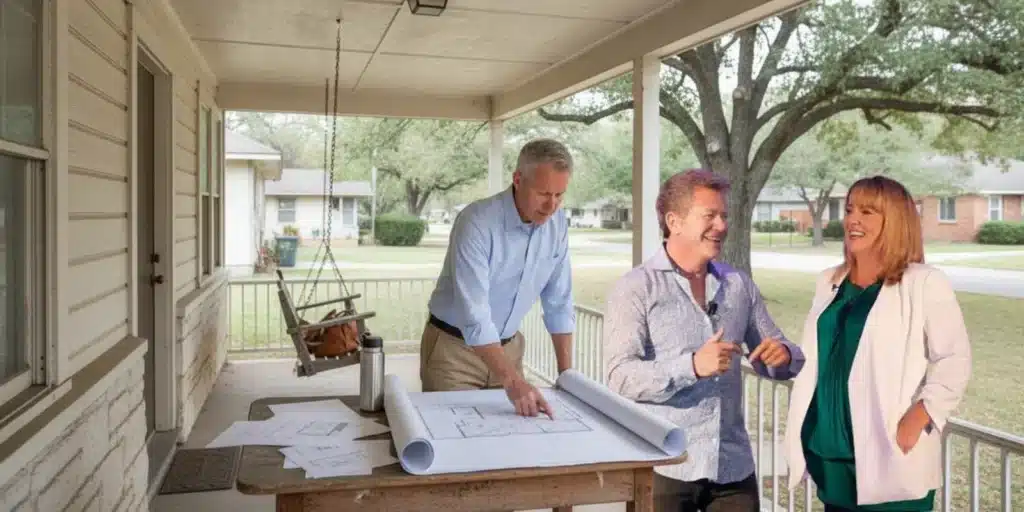
Talk through your real estate investing options
What should Austin Texas real estate investors evaluate first?
Start with the property and the work it needs. Gather the asking or proposed purchase price, recent comparable sales, visible condition issues, likely repair scope, and a realistic timeline. Then identify the strategy you are considering. A fix-and-flip, a wholesale transaction, and a long-term rental each rely on different assumptions, so the same property can look different under each plan.
Real estate is pocket-driven rather than area-driven. A location name alone cannot tell you whether a deal works. No matter the area or price point, the margin must fall within a range that is acceptable for the chosen strategy. The relevant margin factor depends on that strategy, the property, and the work required.
For market context, Texas A&M’s Texas Real Estate Research Center provides Austin-Round Rock-San Marcos housing activity data, including information about sales, listings, prices, and inventory. Use market information as context, not as a substitute for evaluating a specific property: Austin-Round Rock-San Marcos housing activity.
Austin’s public resources can also help you identify the right questions about housing, homeowner resources, repairs, and local conditions. The City of Austin website is a useful starting point for official city information. Neither a market report nor a city resource replaces property-level due diligence.
How do you compare common residential strategies?
Before you commit time or money, put the options side by side. The table below is a starting framework, not a promise of results. Confirm actual costs, timelines, responsibilities, and terms for the property and any partnership.
| Strategy | Main evaluation focus | Typical execution questions |
|---|---|---|
| Fix-and-flip | Purchase price, current condition, repair budget, after-repair value (ARV), selling costs, and timeline | Who estimates repairs? What could delay work or sale? Is there enough margin after costs? |
| Wholesale | Contract terms, buyer demand, assignment or closing process, and transaction costs | Can the opportunity be documented clearly? What is the exit and closing plan? |
| Buy-and-hold | Rent assumptions, ongoing expenses, vacancy, maintenance, financing, and holding period | Do projected income and costs fit the intended timeline? How will management be handled? |
Partner Driven usually foregrounds fix-and-flip, short-term, and wholesale opportunities. Buy-and-hold is a distinct method that requires different computations, including timeline, margins, and profits. It should not be treated as interchangeable with a short-term project.
A practical comparison also asks how much control and coordination each strategy requires. A flip may involve a defined renovation and resale plan. A wholesale transaction may depend more heavily on contract structure, buyer readiness, and a clear closing path. A rental may require a longer view of operations, reserves, tenant-related work, and ongoing management. Choosing a strategy before examining those demands can lead to an incomplete evaluation.
Consider a simple example. Suppose two properties appear to offer similar projected sale values. One needs a clearly scoped set of repairs and has comparable sales nearby; the other requires further investigation of major systems and has fewer close comparisons. The headline spread between purchase price and projected sale value may look alike, but the uncertainty is not. The second property may require more time and professional input before you can judge whether its margin fits the plan. This is why a screening table should record both the estimate and how confident you are in it.
Likewise, a rental calculation should not simply borrow the assumptions used for a flip. It needs a separate view of rent, recurring expenses, vacancy, management, and how long you expect to hold the property. If you are comparing a short-term project with long-term ownership, write down the different time horizons and decision points rather than treating the strategies as variations of the same calculation.
How should you assess a potential fix-and-flip?
Define two values before drawing a conclusion. As-Is Value is the property’s current value. After Repair Value, or ARV, is the estimated sale value after the planned work is complete. ARV should exceed the purchase price, but that comparison alone is not enough. Repairs, closing and carrying costs, marketing, and the time needed to complete the project affect the available margin.
Paying above as-is value can sometimes make sense when the expected value after repairs leaves sufficient profit in the deal. Conversely, an attractive price can still be a poor fit if the repair scope, schedule, or resale assumptions do not hold up. A higher as-is value may provide a stronger safety cushion, but every opportunity still needs its own analysis.
For many flips, a working-class lens can be useful. Blue-collar neighborhoods and properties at or below the median price may offer accessibility, broader buyer demand, a more manageable renovation scope, and a faster, more efficient project. This is a lens, not a universal rule. Evaluate the numbers and the specific market rather than excluding an area or imposing a hard purchase-price cutoff.
Which numbers belong in an initial review?
- Acquisition: Record the proposed purchase price and any known contract, closing, or transaction costs.
- Condition: Separate visible cosmetic work from items that need a qualified inspection or contractor estimate.
- Scope: List necessary work, likely costs, materials, labor, permits where applicable, and items that could change after further review.
- Exit: Support ARV with relevant comparable sales and consider the likely buyer pool for the finished property.
- Schedule: Estimate acquisition, renovation, marketing, and sale timing. Delays can add carrying expenses and change the planned exit.
- Margin: Test assumptions that match the strategy and ask what happens if costs rise or sale timing changes.
Turn this list into a working worksheet. For each input, note its source, date, and confidence level. For example, a contractor walkthrough may support a repair estimate more strongly than a quick visual guess; recent comparable sales that closely resemble the property may support an ARV better than a broad neighborhood average. Flag unknowns instead of silently filling them with optimistic assumptions.
Then run at least two versions of the preliminary analysis. The first uses your current best estimates. The second tests a less favorable possibility, such as a longer renovation, a lower resale estimate, or additional repairs. This does not predict what will happen. It shows which assumptions carry the most weight and whether the deal still deserves investigation if one of them changes.
Do not treat an early estimate as a final approval. A preliminary screen tells you whether an opportunity deserves more investigation. Inspections, contractor input, comparable sales, title work, and the applicable written agreement can change the decision.
What should you know about Austin market research?
Market research is most useful when it answers a specific question. Instead of asking whether Austin is a good market in the abstract, ask whether the likely buyer pool supports the planned exit, whether comparable homes support the ARV, and whether the project timeline fits local conditions.
Compare properties that are genuinely similar in location, size, condition, features, and intended buyer. A distant sale or a substantially different home may create a misleading comparison. Keep a record of why each comparable is relevant and what makes it less reliable. This habit makes it easier to explain your assumptions to a coach, partner, contractor, or other professional.
Use a consistent process when reviewing comparable sales. First, define the property you are trying to value and the likely buyer for the finished home. Next, collect recent sales that resemble it as closely as possible. Then note differences that could affect value, such as condition, size, features, or location. Finally, explain why you included or excluded each comparison. If the evidence is thin, mark the ARV as uncertain instead of presenting it as precise.
Also consider the relationship between speed and carrying costs. A simple, well-defined renovation may be easier to schedule than a high-end project requiring custom materials or extensive coordination. That does not make every modest property a good deal, and it does not make every higher-priced property a bad one. It means the plan should match the property and the margin.
For a broader framework, review this guide to real estate market trends. The goal is not to predict the future perfectly. It is to make assumptions visible, identify uncertainty, and decide what needs to be verified before you proceed.
Local context can also shape your diligence questions without becoming a blanket judgment about a whole city or district. Ask what a particular property’s condition, comparable sales, likely buyer, and expected timeline mean for this particular strategy. Then check whether you need help understanding a city record, repair item, or transaction step. A market report helps you ask better questions; it does not answer them for a specific address.
What does a real estate partnership involve?
A partnership can help a newer investor connect opportunity sourcing with deal analysis, capital, and execution support. The roles still matter. You bring the opportunity. We bring the capital, systems, experience, and support. You may identify a property, speak with the seller, negotiate, and learn how to assess the deal. Partner Driven’s role, after review and approval, is to bring capital, training, personal support, and deal guidance to help move the opportunity through the transaction.
For opportunities reviewed and approved together, Partner Driven’s stated model can include funding the purchase and approved work, supporting the transaction through acquisition, renovation, and closing, and sharing net profits 50/50 subject to the applicable written agreement. The back office handles paperwork and coordinates with title companies, closing attorneys, and agents. The team can also support renovation and the process through closing. The partner remains involved in finding opportunities, communicating with sellers, and understanding the evaluation process; the partner is not expected to run the entire operation alone.
Funding and approval are not guaranteed, and no profit or outcome should be assumed. Partners still invest time, take action, communicate with sellers, and learn the work involved in a real estate business. Ask for the written terms and clarify which costs, decisions, responsibilities, and profit calculations apply to the deal.
To understand the structure in more detail, read how the Partner Driven program works and review these ways investors think about funding a real estate deal. Serious prospects should use the application and partner proposal process for current program details rather than relying on an old description or an assumption about terms.
It can help to picture the work as a sequence rather than a single handoff. A partner notices a potential opportunity, learns enough about the seller’s situation and property to discuss it, and shares the available facts. The deal is then reviewed; approval is not automatic. If an opportunity is approved and the parties proceed under written terms, Partner Driven brings capital and support to the agreed work. The team coordinates the transaction and relevant professionals, while the partner stays engaged, communicates, and learns from the evaluation and execution. That shared process is different from either a promise to fund every lead or an education-only arrangement that leaves the partner to manage every task alone.
Before moving forward, distinguish questions that can be answered now from questions that depend on a particular property or proposal. You can ask how opportunities are submitted, what information helps review, how written terms address costs and net profit, and what happens if a deal is not approved. Do not assume terms based on a general description; ask for the current proposal and read the agreement for the specific opportunity.
How can you investigate opportunities in Austin?
Build a repeatable process rather than relying on a single tip or headline. Start with a defined property type and an area you can research. Compare similar properties, then speak with people who understand the local condition and transaction process. Keep notes on why a deal might fit a strategy and what evidence would change your view.
- Set your criteria: Identify the property type, condition range, and strategy you are prepared to evaluate. Do not turn your first criteria into an inflexible rule before you understand the market.
- Source opportunities: Look for properties where the seller’s situation and the property facts are clear enough to investigate respectfully.
- Collect the facts: Record price, condition, comparable sales, repair questions, timeline, likely transaction costs, and the intended exit.
- Verify assumptions: Check the repair needs, projected value, buyer demand, schedule, and likely costs with appropriate professionals and available records.
- Discuss the exit: Decide whether the intended path is renovation and resale, wholesale, or a separate rental analysis.
- Get a second review: Share the facts and uncertainties with an experienced person before making commitments.
- Document the decision: Write down why the deal fits or does not fit, what remains unknown, and what would have to happen next.
Make the process manageable by separating the first screen from deeper diligence. In the first screen, gather enough information to decide whether the lead is worth another conversation: property basics, seller context, an initial condition picture, possible strategy, and obvious unknowns. If it merits more time, organize supporting documents and seek the appropriate professional input. This order helps avoid spending heavily on every lead while still taking promising opportunities seriously.
When you speak with a seller, focus on listening and clarity. Confirm what the seller is willing to share, what timing matters to them, and whether there are known issues with the property. Avoid promising a price or outcome before the facts and the relevant process have been reviewed. A clear, respectful conversation can help both sides decide whether it makes sense to continue talking.
Partner Driven works nationwide, so a partner may pursue an opportunity close to home or in another area. The key question is whether the numbers and plan make sense, not whether the address fits a blanket rule. You can also review the role of a real estate investment partner while considering what kind of support would be useful.
What should you clarify before taking the next step?
Good questions make the process more concrete. Before pursuing a partnership or a property, ask:
- What evidence supports the current value and the projected exit value?
- Which repairs are confirmed, and which remain estimates?
- What could extend the timeline or increase costs?
- Which strategy is being considered, and what margin standard applies to it?
- What does the written agreement say about funding, responsibilities, costs, and profit sharing?
- What decisions must I make, and what support is available at each stage?
- What happens if the property does not meet approval criteria?
- Which assumptions should be reviewed by a contractor, inspector, title professional, attorney, or other qualified adviser?
These questions are useful whether you already have a property or are still learning how to recognize one. A serious conversation should make the work clearer, not pressure you to ignore uncertainty. It should also distinguish between what is known, what is estimated, and what depends on approval or a written agreement.
It can help to make a one-page decision note before you ask for another opinion. Include the strategy, key property facts, purchase assumption, strongest evidence for the exit value, major repair questions, expected schedule, and the three uncertainties that matter most. End with a clear request, such as help checking the repair scope or understanding the next transaction step. A focused note makes feedback more useful than sending a collection of unorganized links or partial estimates.
After feedback, update the note rather than relying on memory. Mark which assumptions changed, who supplied new information, and what still needs confirmation. If the opportunity no longer fits, recording why is valuable: it helps you refine your criteria and recognize similar issues sooner. If it remains worth pursuing, you will have a clearer list of tasks and decisions instead of a vague sense that the deal “looks good.”
You do not need a perfect plan, a selected property, or years of experience to begin asking these questions. You do need to be willing to learn, speak with sellers, evaluate opportunities, and understand the work involved. Real estate investing does not require deciding that you will become a full-time investor tomorrow; you can first learn what a particular path would ask of you.
Frequently asked questions
Do Austin investors need to focus on one neighborhood?
No single neighborhood label can determine whether a deal is viable. Compare the specific property, strategy, local demand, costs, and acceptable margins. The right evaluation depends on the opportunity rather than an automatic area exclusion.
Is the lowest purchase price always the best deal?
No. A low price does not settle questions about condition, repair costs, timeline, or exit demand. A higher purchase price may still fit if the numbers leave an acceptable margin for the strategy, while a cheap property may not.
Does a partnership guarantee that a deal will be funded?
No. Opportunities are reviewed and must be approved, and funding is not guaranteed. Ask about the specific approval process and rely on the written agreement for deal terms.
Can someone explore investing without an Austin property in hand?
Yes. You can talk through what you are trying to accomplish, what you have already considered, and what is making you hesitate without having a deal picked out or every answer. A conversation can help you understand your options; it does not require an immediate decision.
Does Partner Driven only work with people who already have experience?
No. The model is intended to support aspiring and beginner investors as well as people who have already studied real estate. You still need to take action, communicate with sellers, learn to evaluate opportunities, and understand the responsibilities of the partnership.
Start a no-pressure conversation about your next step
Tell us where you are, what you are trying to accomplish, and what is making you hesitate; you do not have to decide today that Partner Driven is your answer, and a conversation can still give you clarity about what to do next.