

Real estate development is the process of turning a property or site into a planned, usable real estate project. For new investors, understanding real estate development means looking beyond construction: the work can begin with an idea and feasibility review, then move through site control, approvals, financing, building, and a final sale or operating plan. Each stage has decisions that affect the next one.
Talk through your real estate goals
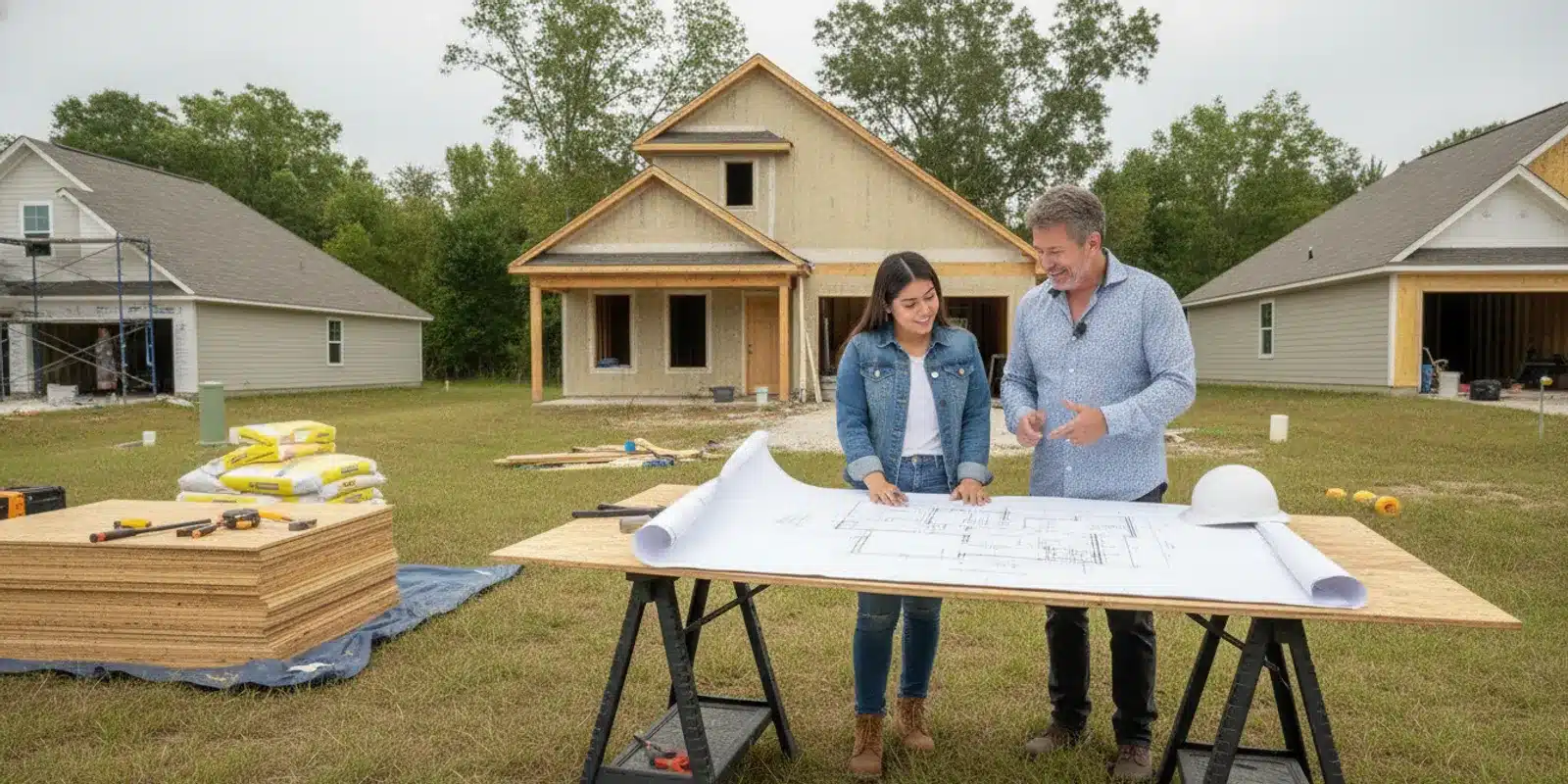
What does real estate development mean?
Development is the coordinated process of creating or substantially changing real estate for a defined use. A project might involve building new housing, changing the use of an existing property, adding units, or improving a site as part of a broader plan. The exact work depends on the property, local rules, project scope, and intended end user.
A developer does not simply buy a property and wait for its value to rise. Development requires making a plan, testing whether the plan is practical, coordinating people and approvals, and managing execution. Depending on the project, participants may include a landowner, developer, architect, engineers, planning officials, contractors, lenders or capital partners, brokers, and future occupants or buyers.
Development is a broad term, not a promise of profit or a single investment formula. A project can be delayed, require redesign, cost more than expected, or fail to receive an approval. The concept must be checked against actual property conditions, local requirements, market evidence, and available resources before anyone treats it as a viable project.
How is development different from buying, flipping, or passive investing?
These approaches can overlap, but they involve different scopes of work and decision-making. An acquisition is the purchase of an existing asset. A fix-and-flip generally focuses on purchasing an existing property, completing a defined renovation, and selling it. Development may include those activities, but it can also involve site planning, entitlement or permit work, new construction, and coordination across a longer sequence.
Passive real estate investing is another distinct role. A passive investor contributes capital to a project or investment vehicle but usually does not run the day-to-day work. A developer or active project partner is involved in shaping the plan and moving it forward. Actual responsibilities depend on the documents and arrangement among parties.
- Acquisition: Main focus: buying an existing property or asset. Typical decision point: do the price, condition, and intended use make sense? Work to understand: property review, transaction terms, and an ownership plan.
- Fix-and-flip: Main focus: renovating an existing property for resale. Typical decision point: can the purchase, scope, schedule, and exit support an acceptable margin? Work to understand: as-is value, repair scope, after-repair value, carrying costs, and sale plan.
- Development: Main focus: creating or substantially changing a property or site. Typical decision point: is the concept feasible, approvable, financeable, and executable? Work to understand: site suitability, design, approvals, budget, construction, and end use.
- Passive investment: Main focus: providing capital without managing daily project execution. Typical decision point: are the structure, risks, reporting, and terms understood? Work to understand: documents, sponsor or operator, investment risks, and decision rights.
The table is a starting point, not a substitute for reviewing a specific opportunity. A small redevelopment can still require complex approvals, while some renovation projects may involve only a limited scope. The name attached to a strategy matters less than the actual work, legal structure, schedule, and obligations.
If your immediate interest is an existing residential property rather than a ground-up or larger development project, you can learn about house flipping and the work involved. If you are still sorting out capital options, Partner Driven also explains ways investors may think about funding a real estate deal; capital planning is only one part of project feasibility.
What are the main stages of a development project?
There is no universal sequence that fits every property or jurisdiction. Some investigations happen in parallel, and new information can send a project back to an earlier step. Still, a lifecycle view helps an investor see what must be understood before committing further time or money.
1. Define the concept and intended use
Start with a clear description of the problem the project is meant to solve and who might use the finished property. For example, is the idea to create housing, improve an existing building, or adapt a site for a different use? Avoid beginning with a preferred building design before checking whether the site and local rules can support it.
Write down the basic assumptions: the property or area under consideration, the intended use, the scale, the likely user or buyer, and the reasons the project might be needed. Treat each assumption as something to test, not as a fact merely because it sounds plausible. A concise concept helps the project team identify the most important questions early.
2. Screen the site and its constraints
Before pursuing an elaborate plan, review whether the site appears suitable. Consider its location, access, shape, existing structures, utilities, topography, and surrounding uses. The relevant checks depend on the property. A site visit and preliminary records review can surface issues that need specialist attention.
Confirm what uses and building forms may be allowed with the appropriate local planning or building authorities. Do not assume that an existing use, a nearby project, or an online listing establishes what can be built on a particular parcel. Zoning, permitted uses, density, setbacks, parking, access, environmental conditions, and utility capacity may all affect what is possible. Specific requirements vary by jurisdiction and site.
At this early stage, the purpose is to identify potential blockers and the need for further investigation. It is not a substitute for a survey, title review, environmental assessment, engineering work, legal advice, or written confirmation from the relevant authority where one is needed.
3. Test feasibility before treating the idea as a deal
Feasibility asks whether the concept can reasonably proceed given the site, market, approvals, schedule, costs, and resources. It is not a single calculation. A project may appear attractive on an initial sketch but become impractical when the team accounts for site work, required improvements, approval conditions, construction timing, or the likely end use.
Build an initial project model using clearly labeled assumptions. Identify likely acquisition and professional costs, design and approval work, construction and site costs, carrying costs, and the expected costs of selling or operating the finished property. Compare these with a supportable view of the end value or income. Use ranges or scenarios where uncertainty is high, and note which assumptions still need evidence.
Ask what happens if key assumptions change. What if approvals take longer, the scope grows, construction costs change, or the anticipated buyer or tenant is not available when the project is ready? Stress-testing does not remove uncertainty; it helps reveal whether the project depends on a narrow set of optimistic assumptions. Do not rely on an advertised projected return without reviewing its basis and the risks that could change it.
4. Confirm site control and project terms
If early review supports more work, the investor or development team must understand how it can secure the property or otherwise control the opportunity while investigations continue. The right structure depends on the deal and should be reviewed with qualified real estate and legal professionals. Purchase agreements, options, partnership documents, and other arrangements can create different duties, deadlines, and financial exposures.
Make sure the relevant people understand what is being agreed to: who is responsible for each cost, what due diligence is allowed, what approvals remain outstanding, how decisions are made, and what happens if a condition is not met. A verbal understanding is not a substitute for reviewing the applicable written agreement. Avoid committing to a transaction on the assumption that future approval or funding is certain.
5. Develop the design and pursue approvals
With a clearer concept and site understanding, the team can develop a design that responds to the intended use and known constraints. Architects and engineers may help assess layout, building systems, site work, safety, and code requirements. Planning and permitting steps can involve submissions, reviews, revisions, public processes, or conditions, depending on local rules and the project.
Approval is not automatic. A proposal may need to change, take more time, or stop if it cannot meet requirements. Keep a record of which approvals are required, who is responsible for seeking them, what has been submitted, and what remains unresolved. Do not describe a project as approved until the required approval has actually been granted.
6. Confirm capital, contracts, and readiness to build
Once there is enough information to define the project, the team can assess whether the capital plan fits its scope and risk. This involves more than identifying a source of money. Review what costs are included, when funds may be available, what conditions must be met, who bears which obligations, and how schedule changes or cost overruns will be handled. Terms vary, so obtain advice before entering financial or legal commitments.
Before construction, make sure the project has a workable scope, suitable plans, required approvals, a realistic budget and schedule, clear responsibilities, and a process for handling changes. Contractors should understand the work they are being asked to perform, and the project team should know how progress, quality, safety, and payments will be monitored. Gaps discovered during construction can be more disruptive than questions raised during planning.
7. Manage construction, completion, and the exit or operation
During construction, compare actual progress with the approved scope, budget, and schedule. Track decisions and changes. When an unexpected condition requires a change, understand its effect on cost, time, approvals, and the intended outcome before authorizing the work. Maintain appropriate documentation and use qualified professionals for technical matters.
Completion is not simply the day the main construction work ends. The project may need inspections, final approvals, corrections, utility coordination, or other closeout steps. The specific requirements depend on the work and local rules. Plan for how the finished property will be marketed, sold, leased, or operated, and who will handle those responsibilities. The chosen exit or operating plan should have been considered during feasibility rather than invented at the finish line.
A useful overview of the development process, including feasibility and the stages that follow, is available in the University at Buffalo research guide to real estate development resources. Use it as a starting point for further learning, not as a substitute for project-specific professional guidance.
What should a new investor examine in a feasibility review?
A new investor does not need to become an architect, land-use attorney, contractor, and underwriter all at once. The important skill is knowing what needs to be validated, who is qualified to validate it, and how the answer affects the next decision. A practical review can be organized around a few questions:
- Does the site support the concept? Identify physical constraints, access, utilities, existing conditions, and information that still requires professional investigation.
- Is the intended use allowed or potentially approvable? Confirm the relevant process with local authorities and qualified professionals. Do not treat a preliminary conversation as a final approval.
- Is there evidence for the end-use assumption? Research the likely buyer, tenant, or user and test whether the proposed space and price or rent fit what the market can support. Separate verified information from estimates.
- Are all major costs represented? Look beyond the purchase price and visible construction. Account for professional services, site preparation, approvals, insurance, taxes, utilities, carrying time, closeout, and sale or operating costs as applicable.
- Does the schedule include real dependencies? Note what must happen before design, approvals, financing, construction, and occupancy or sale can proceed. Build in a way to revisit the plan if a critical milestone slips.
- Who has authority and responsibility? Make roles, decision-making, reporting, and financial obligations clear in the written agreements.
- What is the fallback if the plan changes? Consider the practical alternatives if a use is not approved, the budget no longer works, or the exit market changes. A fallback is not guaranteed to be available, but identifying the question early is useful.
For a simple first pass, prepare a one-page concept note, a list of site questions, an assumptions-based budget, an approval checklist, and a list of unresolved risks. This will not prove a deal is viable. It can, however, help a qualified adviser or potential partner see what you know, what you do not know, and what should be investigated next.
What risks should investors keep visible?
Development concentrates decisions across many moving parts. Common risk areas include uncertainty about site conditions, changes in project scope, approval delays or denials, construction issues, shifting costs, schedule slippage, changes in buyer or tenant demand, and a mismatch between the project and available capital. Not all risks can be predicted, and a plan cannot ensure a particular result.
Keep risks connected to decisions. If an approval is uncertain, avoid treating it as granted in the project model. If a cost estimate is preliminary, label it as such and ask what could change it. If an exit value depends on comparable properties, examine whether the comparisons are relevant to the proposed finished property. If only one outcome makes the numbers work, acknowledge how exposed the plan is to changes.
Risk allocation also matters. A participant may have responsibilities under a contract or partnership agreement even if they do not manage construction personally. Read the documents, ask questions, and consult qualified legal, tax, financial, and technical professionals for advice specific to your situation. A development overview cannot establish whether a specific investment is appropriate for you.
Where can a hands-on partnership fit?
Someone interested in development may already have watched videos, read articles, reviewed listings, and started estimating costs. The next challenge is often applying that information to a real opportunity: deciding which assumptions need proof, who should review the site, and whether the project scope fits the investor’s experience and resources.
Partner Driven focuses primarily on residential fix-and-flip, short-term, and wholesale strategies, rather than presenting ground-up real estate development as its standard offer. These strategies have different scopes and computations from a development project. A person exploring an existing-property opportunity can review what to consider in a real estate investment partnership and see how active roles and partnership terms should be understood.
In Partner Driven’s stated partnership model, a partner brings a local opportunity and works on sourcing and negotiating it; Partner Driven may provide capital, coaching, and transaction support for a deal that is reviewed and approved. The scope and responsibilities depend on the specific approved deal and applicable written agreement. Funding is not guaranteed, and no profit or outcome should be assumed.
For a residential renovation, it can also help to understand how a property’s current condition and proposed work relate to an eventual sale. Partner Driven’s real estate investing resources offer a place to explore the broader context. The right next step is the one that matches the actual opportunity, the work you are willing to take on, and the guidance you need.
Explore your options with Partner Driven
How can you organize an early project review?
A written review makes it easier to separate facts from guesses. It also helps keep a compelling idea from quietly turning into a commitment before important questions have been answered. You do not need an elaborate presentation to begin. A clear record can help you decide whether to investigate further and give advisers a useful starting point.
Build an assumption register
List each important claim behind the concept and label its current status. For example, note whether the intended use is confirmed, appears possible but needs professional review, or is only an untested idea. Do the same with estimates for construction scope, timing, end value, and demand. Record who or what could verify each claim and when you expect to check it.
This discipline prevents estimates from being repeated as facts. If an early sketch assumes a certain number of units, treat that as an assumption until land-use review, design, site conditions, and professional input support it. If an estimate assumes utility connections are available, mark that for confirmation. The purpose is not to make every unknown disappear on day one. It is to identify which unknowns could change the decision.
Set decision gates
Break the process into points where you decide whether to continue, pause, change the concept, or stop. A first gate might ask whether the site is worth a closer look. The next could depend on whether the intended use is plausible and whether preliminary costs and end-use assumptions fit together. Later gates might require clearer plans, necessary approvals, an agreed capital plan, or a construction-ready scope.
For each gate, define the evidence you need before moving forward and the person responsible for obtaining it. Set a date to revisit open questions, but do not let a target date turn an unresolved issue into an assumed answer. A decision gate is valuable because it gives the team permission to pause when the available information does not yet support the next commitment.
Connect the budget to the schedule
Costs and time interact. A delay may increase the period a property must be held, affecting carrying expenses and the availability of capital. A design change can add professional work, require another review, or alter construction sequencing. A project budget should connect major cost categories to the stage when they may arise, rather than treating the total as a single number detached from the schedule.
Ask the people preparing estimates what is included and excluded, how current the information is, and what assumptions they made. Compare estimates on a consistent scope. If two proposals describe different work, a lower total is not necessarily a lower cost for the same outcome. As plans become more detailed, revise the budget and record why it changed instead of leaving old assumptions in circulation.
Keep the exit plan tied to the concept
The end-use strategy should influence decisions from the beginning. A project designed for a particular buyer may require different layouts, finishes, access, or amenities from a project intended for longer-term operation. The development team should be able to explain who the finished property is for and what evidence supports that choice. If the anticipated buyer or tenant profile changes, assess whether the design and numbers still make sense.
Do not treat a sale, lease, or operating plan as an afterthought. Each option can involve different responsibilities and costs, and may require a different team. Clarify who will handle the transition from construction to marketing, closing, leasing, or ongoing management. Where the path remains uncertain, keep that uncertainty visible in the feasibility review.
What does a thoughtful project team contribute?
Real estate development often requires coordinated expertise rather than one person making every technical decision. The team is not identical from project to project, but it may include professionals who can assess land use, design, engineering, construction, legal structure, market assumptions, and financial planning. The investor or project lead still needs to understand how these pieces fit together and who is accountable for each work product.
Choose professional help based on the question that needs answering. An architect may help explore design and building requirements; an engineer may assess site or infrastructure issues; a surveyor can provide property measurements; a land-use professional or attorney can help interpret applicable processes; and a contractor can help evaluate constructability and scope. Which advisers are appropriate depends on the site and jurisdiction. Verify qualifications and define the scope of an engagement rather than assuming one adviser covers every discipline.
Coordination matters as much as individual expertise. If design, cost estimating, permitting, and construction planning happen in isolation, assumptions can conflict. Make sure the team is working from the same version of the plan, significant revisions reach the people affected, and questions have an identified owner. Keep important decisions and changes documented so the full team can understand them later.
Clear communication does not remove project risk, but it can help reveal mismatches earlier. Ask for plain-language explanations of technical findings and how they affect cost, timing, scope, and the decision to proceed. If a recommendation is outside your understanding, pause and seek clarification from the qualified person best suited to answer. A responsible process makes room for questions instead of treating them as a lack of confidence.
How does development fit with a first real estate investment?
Development can be a meaningful path for people drawn to planning and creating property, but it is not automatically the best first project. The level of uncertainty, the number of approvals, the time required, the amount of coordination, and the consequences of a mistake all depend on the project. Compare the actual responsibilities with your experience, access to qualified help, available resources, and tolerance for uncertainty.
Some aspiring investors begin by learning how to identify and evaluate existing residential opportunities. An existing-property strategy may still require due diligence, negotiation, renovation decisions, and an exit plan, but it can have a different scope from a site-development project. Exploring a more bounded project can help a person learn what work they enjoy and where they need mentorship. It is not a shortcut around research or a guarantee of a successful outcome.
Consider a hypothetical example: an investor sees an older property and imagines adding units. Before assuming the idea is viable, the investor would need to check whether the intended use may be permitted, assess the building and site, understand what design and professional work could be needed, estimate the full project costs, and test whether there is a plausible end-use plan. If those steps point to substantial complexity, the investor might revise the concept, seek experienced partners, or decide a different opportunity better fits their current capacity. Let evidence shape the next step instead of forcing a preferred strategy onto every property.
That same discipline applies when considering a partnership. Be specific about the opportunity, what you are expected to contribute, which party makes decisions, how costs and responsibilities are allocated, and what the written terms say. Ask what the other party will and will not handle. Do not infer a commitment to fund or approve a project from a general conversation about a possible fit.
Frequently Asked Questions
Can a beginner become involved in real estate development?
A beginner can learn the process and potentially participate, but a development project requires careful analysis and qualified support. Start by learning the lifecycle, understanding a specific site, and identifying which professionals and approvals are needed. Do not assume that enthusiasm or a promising concept replaces experience, due diligence, capital planning, or written agreements.
Does real estate development always mean building from the ground up?
No. Development can include new construction, substantial changes to existing property, or other work that creates or changes a real estate use. The particular scope matters. A limited renovation, a redevelopment with approval requirements, and a ground-up project can have very different timelines, risks, expertise needs, and capital plans.
How is development different from a fix-and-flip?
A fix-and-flip usually centers on renovating an existing property and reselling it. Development may involve a broader process, such as testing land use, design, approvals, site work, and construction or substantial repositioning. Some projects combine elements of both, so examine the actual scope instead of relying only on the label.
Is a development project guaranteed to receive approval or make a profit?
No. Approval depends on applicable requirements and review, and financial outcomes depend on project execution and changing conditions. Estimates, projected values, and proposed funding are not guarantees. Confirm requirements with the relevant authorities and qualified professionals, and review the specific written agreements and risks before committing.
What is the first practical step if I am considering a project?
Write down the concept, intended use, site assumptions, likely end user, and biggest unanswered questions. Then determine what evidence or professional review is needed before you take on additional obligations. If the opportunity is an existing residential property, also compare its scope with strategies such as a flip or wholesale deal rather than assuming it requires a development approach.
Real estate development becomes easier to evaluate when you break it into testable decisions and make uncertainty visible. Take the time to understand the property, the approvals, the project team, and your own responsibilities before choosing a path forward.