

Commercial Real Estate Due Diligence Checklist
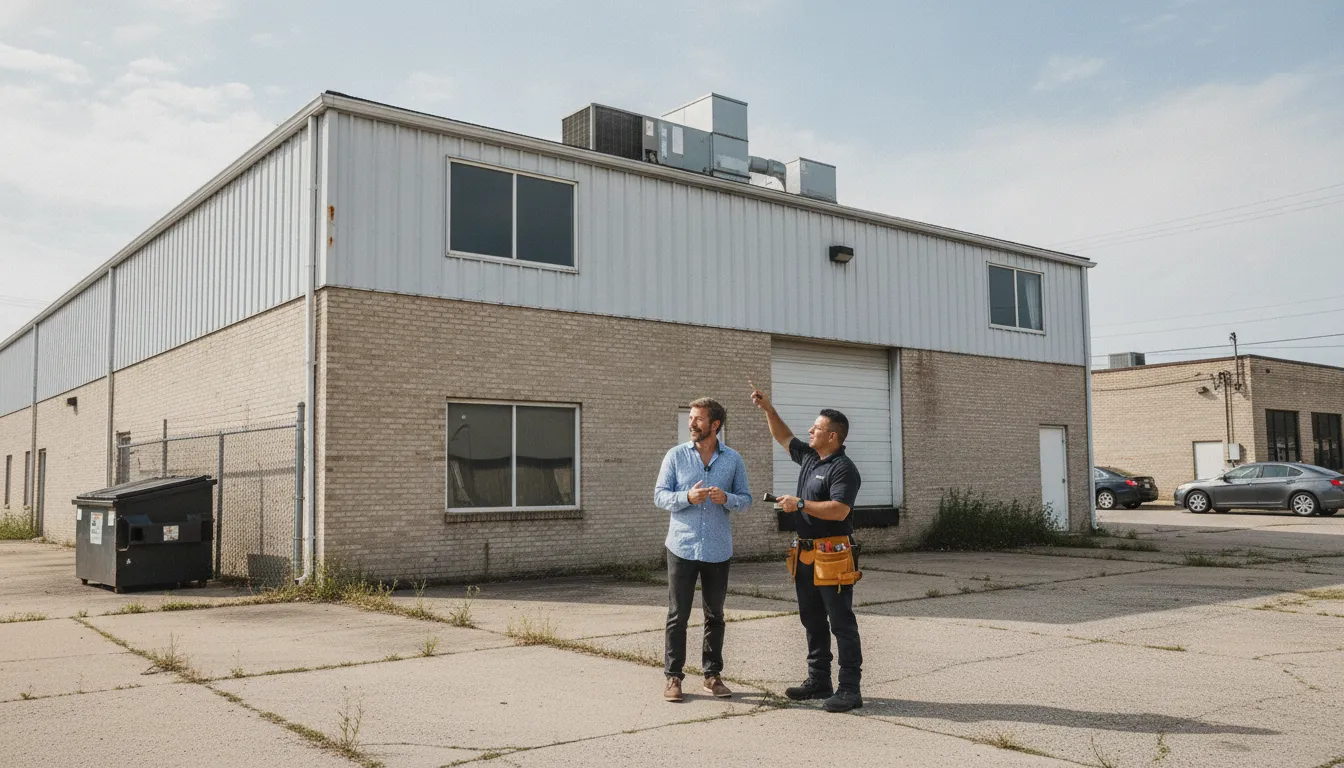
A commercial property can look promising on a tour and still carry problems that change the entire deal. Commercial real estate due diligence is the pre-closing investigation that helps you test the property, documents, finances, legal position, environmental risks, and exit assumptions before you commit. For a beginner investor, the goal is not to predict a guaranteed profit. It is to replace assumptions with verified information, identify unresolved risks, and decide whether the opportunity deserves further negotiation or a no-go decision.
Get Our Partner Proposal to learn how Partner Driven evaluates selected opportunities and supports partners through the process. Every deal is evaluated and approved individually, and funding or approval is not guaranteed.
Commercial real estate due diligence covers the property condition, leases and tenants, operating records, title, zoning, permits, insurance, environmental history, market demand, financing constraints, and realistic exit scenarios. Reviewing these areas with qualified local professionals helps you understand what is known, what remains open, and what could affect the deal’s risk or economics.
The review becomes much clearer when you organize it as a documented process instead of a last-minute document hunt. Start by defining the categories, evidence, and decision questions that will shape your investigation.
What Does Commercial Real Estate Due Diligence Cover?
Commercial real estate due diligence is the pre-closing investigation used to understand what you are actually buying. It involves reviewing the property’s documents, condition, legal status, finances, and operating realities before you decide whether to proceed. The goal is not to make a promising listing sound better. It is to verify material facts and identify risks that may affect use, cost, financing, or resale.
For a plain-language definition, Mass.gov describes due diligence as investigating a potential investment and verifying material facts. That standard applies to more than the building’s visible condition.
Why a walk-through is only the starting point
A commercial property can look sound while its underlying assumptions remain untested. The review may need to examine leases and tenant obligations, income and expenses, title and liens; zoning and permitted uses, permits, access, utilities, insurance, environmental history, and restrictions that could affect a future sale. Depending on the property and location, records may also reveal septic capacity or compliance issues, underground-tank permits, flood exposure, or building-department filings. Qualified local professionals should handle legal, environmental, tax, insurance, and inspection questions.
This broader review matters because commercial value depends on how the property operates, not simply how it appears on inspection day. A use that is not permitted, a cost omitted from the operating picture, or a condition that requires specialist investigation can change the deal’s practical economics.
Diligence informs a decision, but does not guarantee an outcome
Completing a checklist does not guarantee approval, funding, profitability, or a risk-free investment. It gives the investor a stronger basis for asking questions, requesting documents, renegotiating terms, adding conditions, or walking away when the facts do not support the plan. If you are building your broader investing foundation, you can explore real estate investing strategies, then apply the same disciplined evaluation to a specific commercial opportunity.
How Should You Organize Commercial Real Estate Due Diligence?
A clear process keeps a commercial property review from becoming a last-minute collection of disconnected opinions. Organize the work around documents, qualified reviewers, dated decisions, and a visible list of unresolved issues.
- Send one complete document request. Ask the seller or broker for leases, rent rolls, operating statements, service contracts, utility records, surveys, prior inspection reports, permits, insurance information, tax records, and known environmental or code notices. Keep the request in writing and record what has arrived, what is incomplete, and who owns each follow-up.
- Assign the right reviewers. A general walkthrough is not a substitute for professional review. Depending on the property, involve a commercial inspector, real estate attorney, accountant, insurance professional, lender, environmental professional, or contractor. Ask each person to state the assumptions behind their review and identify facts that still need confirmation.
- Build a working calendar. Put document delivery, site visits, inspections, lender review, seller questions, professional reports, and the decision meeting on one calendar. The schedule should reflect the actual agreement and local requirements, not an assumed universal due diligence period. Leave enough time to investigate a new issue before the contractual deadline.
- Maintain an issue log. Use columns for the issue, source, financial or operational impact, responsible reviewer, requested evidence, deadline, and current status. Add tax assessment, tax rate, and paid status to the list. These are identified as due diligence items in Massachusetts guidance, along with building-department records that may reveal permit moratoriums or other filings affecting the neighborhood.
- Set decision standards before reviewing the answers. Separate verified facts, open questions, manageable repairs, and conditions that could change the deal. Decide in advance which findings require a price or term revision, a longer review, legal advice, or a no-go decision. Use a structured analysis to verify commercial deal assumptions, rather than allowing enthusiasm to fill gaps in the evidence.
- Coordinate seller questions in batches. Nominate one person to consolidate questions, remove duplicates, and send them with document references. Request specific answers and supporting records, then log every response. If a reply changes the scope of review, update the calendar and issue log immediately instead of treating the original deadline as fixed.
What Should You Inspect in the Property and Building Systems?
A commercial property inspection should connect visible condition to how the building will be used, operated, insured, and maintained. Start with the structure, foundation, exterior, roof, drainage, and signs of water intrusion; then review the major building systems, including HVAC age and service history, plumbing supply and waste lines; electrical capacity and panels, fire and life-safety equipment, loading areas, parking, entrances, and accessibility. A qualified inspector can identify conditions that are easy to miss during a walkthrough, but the report should be read alongside contractor estimates and the seller’s records.
Confirm how the property receives water and handles wastewater. Depending on the location and intended use, that may involve municipal water, municipal sewer, or a private septic system. The applicable local authority may have records showing septic capacity, permitted occupancy, pumping history, or compliance status. These details can affect whether the proposed use is workable, so do not assume an existing system supports a changed operation. Mass.gov identifies utility type, septic capacity, pumping history, and compliance as potential diligence items: review the source and confirm the requirements with the appropriate local professionals.
Check flood exposure and drainage history, including available flood maps, prior water damage, and whether insurance terms could change because of the property’s location. Ask for seller disclosures, prior inspection reports, repair invoices, warranties, maintenance logs, and documentation for substantial improvements. Compare those records with permits and building-department files. Open permits, unpermitted work, code notices, underground-tank records, or deferred maintenance may create cost, timing, or use questions. Mass.gov also notes that underground-tank permits can affect price or compliance, but the significance depends on the property and jurisdiction.
Finally, convert findings into a repair schedule: immediate safety issues, near-term capital needs, routine maintenance, and items requiring a specialist. Keep assumptions separate from verified facts, and have local inspectors, engineers, environmental professionals, and contractors address questions beyond a general review.
How Do Leases, Tenants, and Financials Change the Deal?
A commercial property can look attractive until the operating records show that income is less durable than the asking price suggests. Review the documents as a connected story: who occupies the property, what each tenant is obligated to pay, whether payments arrive reliably, and which costs the owner actually carries. The goal is not to accept a rent roll at face value. It is to test whether the income and expenses support the proposed business plan.
| Review area. | What to verify. | How it can change the deal. |
|---|---|---|
| Rent roll and leases | Match tenants, suites, rents, deposits, lease terms, options, escalations, reimbursements, and expiration dates against the signed leases. | Missing revenue, near-term expirations, unusual concessions, or unclear renewal rights can make projected income less dependable. |
| Payment history and estoppels | Compare billed rent with collections and delinquencies. Request tenant estoppels confirming key lease facts, balances, and disputes. | Late payments, tenant claims, or confirmations that differ from the seller’s records may require renegotiation or additional protection. |
| Tenant concentration | Identify how much of the income depends on one tenant, industry, guarantor, or lease expiration period. | A concentrated tenant base can increase vacancy and rollover exposure even when current occupancy appears strong. |
| Operating statements and taxes | Reconcile historical statements with bank or supporting records where available. Check property taxes, assessments, and whether taxes are current. | Understated taxes or unsupported income can reduce cash flow. Tax assessment, rate, and paid status belong in the diligence file. |
| Repairs, insurance, and reserves | Review repair invoices, maintenance history, insurance terms, deductibles, claims, capital needs, and reserves for recurring or deferred work. | Costs that were omitted, delayed, or treated as one-time items may require a larger reserve or a different operating assumption. |
| Pro forma and downside cases | Separate verified results from assumptions. Recalculate income and expenses for vacancy, slower leasing, repairs, insurance changes, and other documented risks. | A deal that works only under optimistic assumptions may need a lower price, stronger conditions, more reserves, or a decision to walk away. |
Use the findings to update the business plan rather than simply filling in a spreadsheet. A lease clause can shift expenses to the owner, while a repair pattern can make a historical expense average misleading. For a practical framework to verify commercial deal assumptions, connect each assumption to a document, an accountable professional, or a clearly labeled downside case. Qualified legal, tax, insurance, and accounting professionals should review issues within their disciplines before a final decision.
What Do Title, Zoning, Permits, and Insurance Reviews Reveal?
These reviews test whether the property can be owned, used, financed, insured, and sold in the way your plan assumes. Start with a title commitment or comparable title report, then have the appropriate professionals interpret it. Title research should confirm ownership and identify recorded liens, including possible tax, environmental, or mechanic’s liens. Order a current survey as needed to compare boundaries, easements, parking, driveway rights, and utility access. A property that appears accessible on a map may still have an access issue that affects operations or future construction.
Next, verify the intended use with the local planning or zoning department. Ask which uses are allowed by right, prohibited, or subject to a special permit. Confirm whether existing tenants, additions, signage, parking, and planned changes comply with the applicable rules. The Mass.gov commercial real estate due diligence guidance identifies ownership, liens, zoning uses, special permits, and floodplain location as review items. Local requirements vary, so do not treat a seller’s description or an online listing as a final land-use determination.
Request building and permit records, certificates of occupancy, inspection reports, and any open violations. Building-department records may reveal permit moratoriums or other filings that could affect the neighborhood. If the site is in or near a mapped floodplain, ask how that location affects construction requirements, lender conditions, insurance availability, deductibles, exclusions, and premiums. Obtain an insurance quote or preliminary indication early, rather than assuming coverage will be available on acceptable terms.
Finally, review existing mortgage documents and proposed financing for due-on-sale, yield-maintenance, default, acceleration, assumption, or other lender restrictions. A lender-imposed pre-sale penalty can change the exit calculation. Have a real estate attorney, surveyor, zoning professional, insurance advisor, and lender review the items that fall within their expertise. You can also review legal risks before closing. Their input does not guarantee approval or a profitable outcome, but it can expose conditions that should be resolved, renegotiated, or reflected in the decision before closing.
When Do Environmental Concerns Require Deeper Review?
Environmental review should become a defined part of commercial property diligence when the site’s history, current operations, records, or visible conditions suggest a possible impact to people, the environment, future use, or ownership risk. The goal is not to reach a property-specific conclusion from a checklist. It is to identify questions that require qualified environmental review before a buyer commits.
A Phase I Environmental Site Assessment (ESA) is the usual starting point. It examines current and historical uses of the site and potential threats. The process can include reviewing photographs, maps, and historical records; checking government databases for ownership and environmental records involving hazardous substances or petroleum; visually inspecting the property and nearby sites; and interviewing owners, neighbors, or past workers about operations involving wastes and chemicals. The U.S. Environmental Protection Agency describes these elements in its brownfield site assessment guidance.
Use an environmental professional to complete or oversee the assessment. Depending on the work required, that professional may be a licensed geologist, engineer, or site professional. A Phase I can help identify potential liability connected with contamination, but it does not answer every subsurface question. Findings should be reviewed with the buyer’s legal, insurance, and financing team where appropriate.
When a Phase II ESA may be warranted
If the Phase I identifies known or potential contamination, often described as a recognized environmental condition (REC), a Phase II ESA or additional assessment may be appropriate. The environmental professional develops a sampling plan to evaluate possible hazardous-substance or petroleum contamination, its sources, and potential exposure pathways. The need for this work depends on the evidence and the proposed use, not on a universal rule that every commercial property requires the same testing.
Timing also matters. The EPA notes that additional assessment may be needed if redevelopment plans change or more than 180 days have passed since the ESA. Environmental review is therefore not a one-time formality. Keep the assessment aligned with the intended redevelopment, transaction timeline, and evidence discovered during diligence. Do not treat this section as legal advice or as an environmental conclusion about any specific property.
How Can You Stress-Test Market Assumptions and Exit Risks?
A commercial property can look attractive on paper and still be difficult to lease, refinance, or sell. Stress-testing means challenging the assumptions behind demand, income, expenses, financing, and the eventual exit before those assumptions become part of your decision.
Test the market from several angles
Start with comparable rents and recent sales, but do not treat one nearby property as proof of value. Compare location, access, visibility, condition, usable space, tenant mix, and the time each property took to lease or sell. Then ask who actually creates demand. Review relevant demographics, employment or business activity, traffic patterns, customer access, and competition. Planned development can help or hurt the property, so check local records for projects, zoning changes, infrastructure work, or building-department filings that may affect the neighborhood. Market review should include rent-comparable analysis, demographic trends, and future development impacts, all of which are useful commercial review categories.
Challenge the operating and financing case
Model realistic vacancy rather than assuming every space stays occupied. Recheck taxes, insurance, utilities, repairs, maintenance, management, reserves, and other operating costs against documents and local professional advice. If a tenant leaves, consider how long the space could remain empty and what work might be needed before re-leasing it. Update the business plan when the evidence changes, instead of preserving the seller’s projections.
Finally, test the financing and exit separately. Confirm whether the loan permits a sale or refinance, whether it includes due-on-sale, default, acceleration, assumption, or lender-imposed pre-sale provisions, and how those terms affect timing and proceeds. Mortgage review can reveal sale restrictions and penalties that materially change an exit plan (Mass.gov commercial diligence guidance).
Run decision-changing scenarios
Build cases for slower leasing, lower achievable rent or sale price, higher operating costs, delayed improvements, more expensive financing, and an unavailable refinance. Identify which assumptions would require a price renegotiation, additional reserves, revised financing, a longer hold, or a decision not to proceed. A useful deal analysis process makes those sensitivities visible before the opportunity is treated as approved.
What Belongs in the Final Go or No-Go Memo?
A final memo should turn a large diligence file into a decision that another person can review. Start with a short description of the proposed use, purchase terms, intended exit, and the date the memo was prepared. Then sort every meaningful finding into four categories:
- Verified: facts confirmed through records, inspections, tenant documents, professional reports, or other reliable evidence.
- Unresolved: questions still waiting on a document, response, inspection, estimate, or agency confirmation.
- Mitigated: risks addressed through a repair plan, insurance term, contract protection, revised operating assumption, escrow, or other documented control.
- Deal-breaking: issues that make the planned use, economics, financing, compliance position, or exit unacceptable under the current terms.
For each unresolved or mitigated item, name the owner, next action, decision date, and evidence required to close it. Avoid vague language such as “check environmental.” State whether the Phase I review found a potential concern. Whether an environmental professional recommends further assessment, and what must happen before closing. The EPA notes that environmental assessment can include Phase I, Phase II, and additional work. And that a Phase II may be needed when known or potential contamination is identified. Review the EPA assessment guidance when defining that work.
The memo should also state the available decision paths. Renegotiate when a risk is understandable but the price, credits, repair obligations, timing, or contract protections no longer fit the evidence. Extend the review period when a material answer is pending and the seller will agree to preserve access. Price the risk only when qualified professionals can estimate its likely cost and the revised assumptions remain acceptable. Walk away when a core use is not permitted, a material liability cannot be bounded, financing or insurance is unavailable, or the downside no longer fits the strategy.
This record supports disciplined decision-making, not certainty. Due diligence verifies material facts, but it does not guarantee approval, funding, profit, or a risk-free outcome. A qualified real estate partner can help evaluate the documented opportunity, while the final decision still depends on the specific property, agreement, and professional advice.
Frequently Asked Questions
What is included in commercial real estate due diligence?
A complete review typically covers the building and site, leases and tenants, operating statements. Taxes, title, zoning, permits, insurance, environmental conditions, market assumptions, financing constraints, and the planned exit. The goal is to verify material facts, document open issues, and test whether the deal still makes sense when assumptions are challenged. Involve qualified local legal, environmental, tax, insurance, and inspection professionals where their expertise is needed.
What is the typical due diligence period for commercial real estate?
There is no universal review period. The appropriate timeframe depends on the property’s size, complexity, tenant records, environmental history, local approvals, lender requirements, and the time professionals need to complete their work. Set a written document deadline and decision process in the purchase agreement. Then extend or renegotiate when material information remains unresolved rather than treating the calendar as proof that diligence is complete.
How should investors handle environmental concerns?
Start with a qualified environmental professional and review current and historical uses, available records, databases, site conditions, and relevant interviews. A Phase I Environmental Site Assessment can identify potential concerns and liability questions. If evidence of known or potential contamination appears, additional investigation, such as a Phase II assessment, may be appropriate. The EPA notes that an assessment more than 180 days old may require additional review in some circumstances: EPA assessment guidance.
What is the 2% rule in commercial real estate?
The 2% rule is a screening shortcut, not a universal underwriting standard or guarantee of performance. It should not replace review of leases, vacancy, operating costs, taxes, repairs, insurance, financing, market demand, and exit assumptions. Underwrite the actual property and strategy, document the assumptions, and use downside cases before deciding whether the numbers are acceptable.
Ready to Explore a Commercial Opportunity?
A structured review can help you organize the facts, identify open questions, and decide whether a potential deal fits your strategy. If you are considering a selected commercial opportunity, get our partner proposal to discuss the opportunity and the next steps. Every deal is evaluated individually, and approval or funding is not guaranteed.